
Bronchitis Infections & Upper Respiratory Infections Treatment in Charlotte, NC
Respiratory illnesses like bronchitis infections and upper respiratory infections (URIs) are among the most common reasons people visit urgent care. These infections can cause persistent coughing, chest discomfort, congestion, fatigue, and breathing difficulties that disrupt daily life.
At OneSpotMD in Charlotte, North Carolina, our urgent care and primary care providers diagnose and treat bronchitis and upper respiratory infections quickly so patients can recover faster and avoid complications. Whether your symptoms started with a cold or suddenly worsened, getting a medical evaluation helps ensure the right treatment.
What Is Bronchitis and Upper Respiratory Infections?
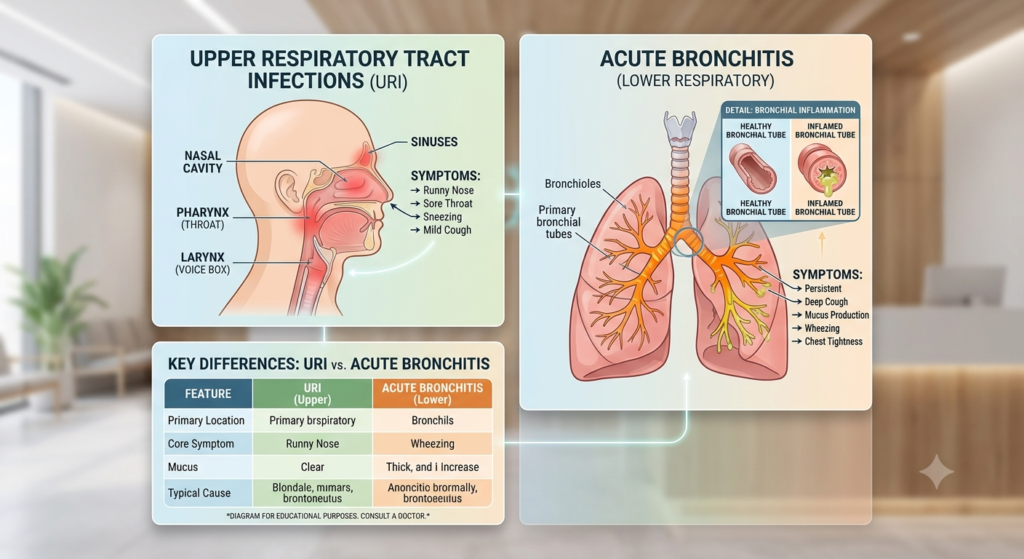
Bronchitis is inflammation of the bronchial tubes — the airways that carry air into your lungs. When these tubes become irritated or infected, they swell and produce excess mucus, leading to coughing and chest discomfort. Most cases of acute bronchitis are caused by viruses such as influenza or RSV.
An upper respiratory infection (URI) affects the nose, throat, and upper airways. Conditions like the common cold, sinus infections, and some throat infections fall into this category. These infections are usually viral and often resolve on their own within a week or two.
While bronchitis affects the lower respiratory tract and URIs affect the upper airway, both illnesses can occur together and produce similar symptoms such as coughing, fatigue, and congestion.
In many cases, these infections start after exposure to respiratory viruses or when the immune system becomes weakened due to stress, seasonal illness, or environmental factors.
Bronchitis and Upper Respiratory Common Symptoms
Symptoms of bronchitis and upper respiratory infections can vary depending on the severity of the infection and the underlying cause.
Common symptoms include:
- Persistent cough with or without mucus
- Chest tightness or discomfort
- Runny or blocked nose
- Sore throat
- Mild fever or chills
- Fatigue and body aches
- Wheezing or mild shortness of breath
- Headache or sinus pressure
The most recognizable symptom of bronchitis is a cough that may produce mucus, often lasting several weeks even after the infection improves.
Upper respiratory infections can also cause sneezing, nasal congestion, and sore throat, with symptoms typically lasting around 7–10 days in many cases.
If symptoms worsen instead of improving, medical evaluation is recommended.
How to Treat Bronchitis
Treatment for bronchitis and upper respiratory infections depends on whether the illness is viral or bacterial.
Because most cases are caused by viruses, treatment often focuses on relieving symptoms while the body fights the infection.
Common treatments include:
Rest and hydration
Getting adequate rest and drinking fluids helps the immune system fight infection.
Over-the-counter medications
Pain relievers, cough suppressants, or decongestants may help reduce discomfort.
Inhalers or bronchodilators
These medications help open airways if wheezing or breathing difficulty occurs.
Prescription medications
If a bacterial infection is suspected, providers may prescribe antibiotics.
Many respiratory infections improve within one to two weeks, although coughing may persist longer while the airways heal.
At OneSpotMD, providers evaluate symptoms carefully to determine whether supportive care or prescription treatment is needed.
How Long Is Bronchitis Contagious?
Bronchitis itself is not always contagious, but the viruses or bacteria that cause it can spread between people.
Most viral bronchitis cases are contagious for several days to about a week, particularly during the early stages of illness.
If the infection is bacterial, the contagious period often ends within about 24 hours after starting antibiotics.
Even after you are no longer contagious, the cough associated with bronchitis can last for several weeks while the airway lining recovers.
Practicing good hygiene — including covering coughs, washing hands frequently, and avoiding close contact when sick — helps prevent spreading respiratory infections.
Bronchitis vs Pneumonia
Bronchitis and pneumonia can have similar symptoms, but they affect the lungs differently and require different levels of care.
Bronchitis
- Inflammation of the bronchial tubes
- Usually caused by viral infection
- Persistent cough with mucus
- Mild fever and fatigue
Pneumonia
- Infection deep within lung tissue
- Often causes higher fever and chills
- Shortness of breath and chest pain
- May require imaging and stronger medical treatment
Pneumonia tends to cause more severe symptoms and deeper lung infection compared to bronchitis.
Because symptoms can overlap, it’s important to get evaluated if coughing, breathing problems, or fever become severe.
When Urgent Care Is Appropriate
Many mild respiratory infections can be managed at home. However, urgent care evaluation is recommended if symptoms worsen or fail to improve.
You should visit urgent care if you experience:
- A cough lasting more than 10–14 days
- High fever or persistent chills
- Shortness of breath or wheezing
- Chest pain when breathing or coughing
- Thick yellow or green mucus
- Fatigue that interferes with normal activities
Medical evaluation is also important if you have underlying conditions such as asthma, COPD, or weakened immunity.
Urgent care providers can rule out pneumonia, perform diagnostic exams, and start treatment immediately.
Clear Next Steps for Patients
If you’re experiencing symptoms of bronchitis or an upper respiratory infection in Charlotte, North Carolina, taking early action can help you recover faster.
Here’s what to do next:
- Monitor your symptoms carefully
Mild symptoms often improve within a week, but worsening cough or breathing problems should be evaluated. - Use supportive care
Rest, fluids, and over-the-counter medications may help relieve symptoms. - Seek medical evaluation when symptoms persist
If symptoms last longer than 10 days or become severe, visit OneSpotMD for diagnosis and treatment. - Follow your treatment plan
Taking prescribed medications and following provider recommendations can prevent complications.
At OneSpotMD, our goal is to provide fast, convenient care for respiratory infections so you can return to normal activities quickly.